
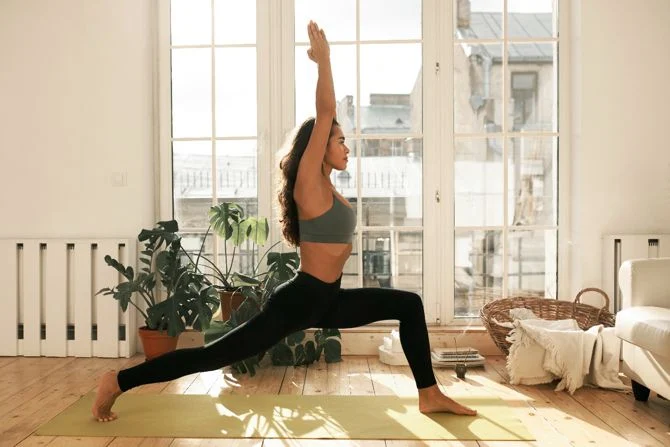
Starting yoga for beginners at home can feel overwhelming at first, but the truth is, you don’t need fancy equipment, a professional studio, or even a strict schedule to begin. Yoga is connecting the mind, body, and soul. Practicing from your living room, balcony, or even your bedroom is completely possible and highly effective. Many people hesitate, thinking they need a yoga teacher at home to guide them, but with today’s resources like free yoga lessons online, you can easily start your practice without stress.
In this blog, I’ll share practical steps, simple yoga exercises, and easy asanas in yoga that anyone can do. The goal is to help you understand basic yoga movements, practice regularly, and slowly improve flexibility and strength. Let’s explore how you can make yoga for beginners at home a part of your daily life.
1. Why Choose Yoga for Beginners at Home?
Practicing yoga for beginners at home allows you to be in your own comfortable space. You don’t have to worry about expensive memberships or adjusting to other people’s pace. With at home yoga beginners, the focus is purely on yourself—your breath, your body, and your personal growth.
Another benefit is flexibility. You can decide your own time—morning, evening, or even a short session during a work break. For those with families, it also sets a healthy example, encouraging kids and loved ones to try out basic postures of yoga.
Many people also feel shy about joining group classes initially. Starting with a yoga lesson at home builds confidence and prepares you if you later want to join advanced sessions. Plus, technology makes it easier than ever—just open a free yoga lesson online, follow step-by-step guidance, and practice in your own way.
The key is consistency. Practicing yoga for beginners at home daily, even for 15–20 minutes, can bring lasting benefits for your body and mind.
2. Setting Up Your Home Space for Yoga
Before diving into basic yoga movements, it’s important to create a calm and safe environment. For yoga for beginners at home, you don’t need a large space. Just a quiet corner with a yoga mat is enough. If you don’t have a mat, a clean carpet can work temporarily, but investing in a mat makes a big difference for grip and comfort.
Light and air circulation are important. Nature light or fresh air makes your at home yoga beginners routine more refreshing. Keep distractions away—turn off the TV, put your phone aside, and inform family members you need 20–30 minutes.
If you want extra motivation, put a calming playlist or keep a candle/incense near you. These small things make your yoga lesson at home feel special.
By dedicating a small corner of your home, you are telling your mind that this is your “wellness space.” Every time you step onto the mat, you remind yourself that yoga for beginners at home is your personal journey of balance and peace.
3. Simple Yoga Exercises to Begin With
The beauty of yoga for beginners at home is that you don’t need complex movements to start. A few simple yoga exercises are enough to bring big changes if done consistently.
Tadasana (Mountain Pose): Stand tall with feet together, hands by your side. This basic posture of yoga improves body alignment.
Balasana (Child’s Pose): Kneel down, bend forward, and stretch your arms. Great for relaxation.
Bhujangasana (Cobra Pose): Lie on your stomach, lift your chest with your palms pressing down. This improves spinal flexibility.
Sukhasana (Easy Sitting Pose): Sit cross-legged, close your eyes, and breathe deeply. Perfect for calming the mind.
For at home yoga beginners, these poses are safe, easy, and effective. They stretch the body gently and prepare you for more basic yoga movements later. You can find many free yoga lessons online that guide these poses step by step.
Practicing just these 4–5 easy asanas in yoga daily for 10–15 minutes will already make you feel lighter, calmer, and more focused.
4. Following Online or Personal Guidance
One challenge of yoga for beginners at home is the lack of guidance. Here, you have two choices: learn through free yoga lessons online or hire a yoga teacher at home.
For many, online lessons are enough. Platforms like YouTube or fitness apps offer hundreds of yoga lessons at home videos designed for beginners. They explain basic postures of yoga in detail, making it easier to follow along.
If you feel you need personal corrections or motivation, hiring a yoga teacher at home can be helpful. A teacher can check your alignment, posture, and breathing, ensuring you don’t hurt yourself. But remember, even with online guidance, practicing at home yoga beginners style is safe as long as you listen to your body and don’t force movements.
Consistency matters more than perfect poses. With the right guidance—whether online or offline—yoga for beginners at home becomes a lifelong habit.
5. Building a Daily Routine
To make yoga for beginners at home effective, create a simple routine. Start with a 5-minute warm-up, then 15 minutes of simple yoga exercises, and end with 5 minutes of meditation.
Morning practice is ideal because it refreshes your body for the whole day. However, if mornings are difficult, evenings work too. The important thing is not skipping. For at home yoga beginners, short and regular practice is better than doing one long session irregularly.
Use reminders, set alarms, or keep your mat in a visible place. If family members join, it becomes more fun and motivating. Slowly, you’ll find yourself moving into more basic yoga movements naturally.
Once you build discipline, you’ll notice how yoga for beginners at home improves flexibility, reduces stress, and enhances focus.
6. Easy Asanas in Yoga for Long-Term Benefits
The last part of your beginner journey is exploring more easy asanas in yoga that support your health long term. Apart from the ones mentioned earlier, try:
Vrikshasana (Tree Pose): Improves balance and focus.
Setu Bandhasana (Bridge Pose): Strengthens back and legs.
Marjariasana (Cat-Cow Pose): Relaxes the spine.
These are all basic postures of yoga that anyone can do without difficulty. They form the foundation for advanced poses. With yoga for beginners at home, you can slowly build strength, flexibility, and mental peace without feeling pressured.
The journey of at home yoga beginners is about patience. Over time, you may move to advanced flows, but these simple poses are enough to keep you healthy for years.
Conclusion
Starting yoga for beginners at home is one of the most rewarding decisions you can make for your health. You don’t need a gym, expensive classes, or strict rules. Just a little corner, a yoga mat, and the willingness to practice daily. With simple yoga exercises, basic yoga movements, and support from free yoga lessons online or even a yoga teacher at home, you can create a lifelong practice.
So, take a deep breath, roll out your mat, and begin. The path of yoga for beginners at home is waiting for you, and every small step will bring you closer to balance, strength, and peace.
